ServicesWhole-Home Filtration
Whole-Home Filtration in Humble
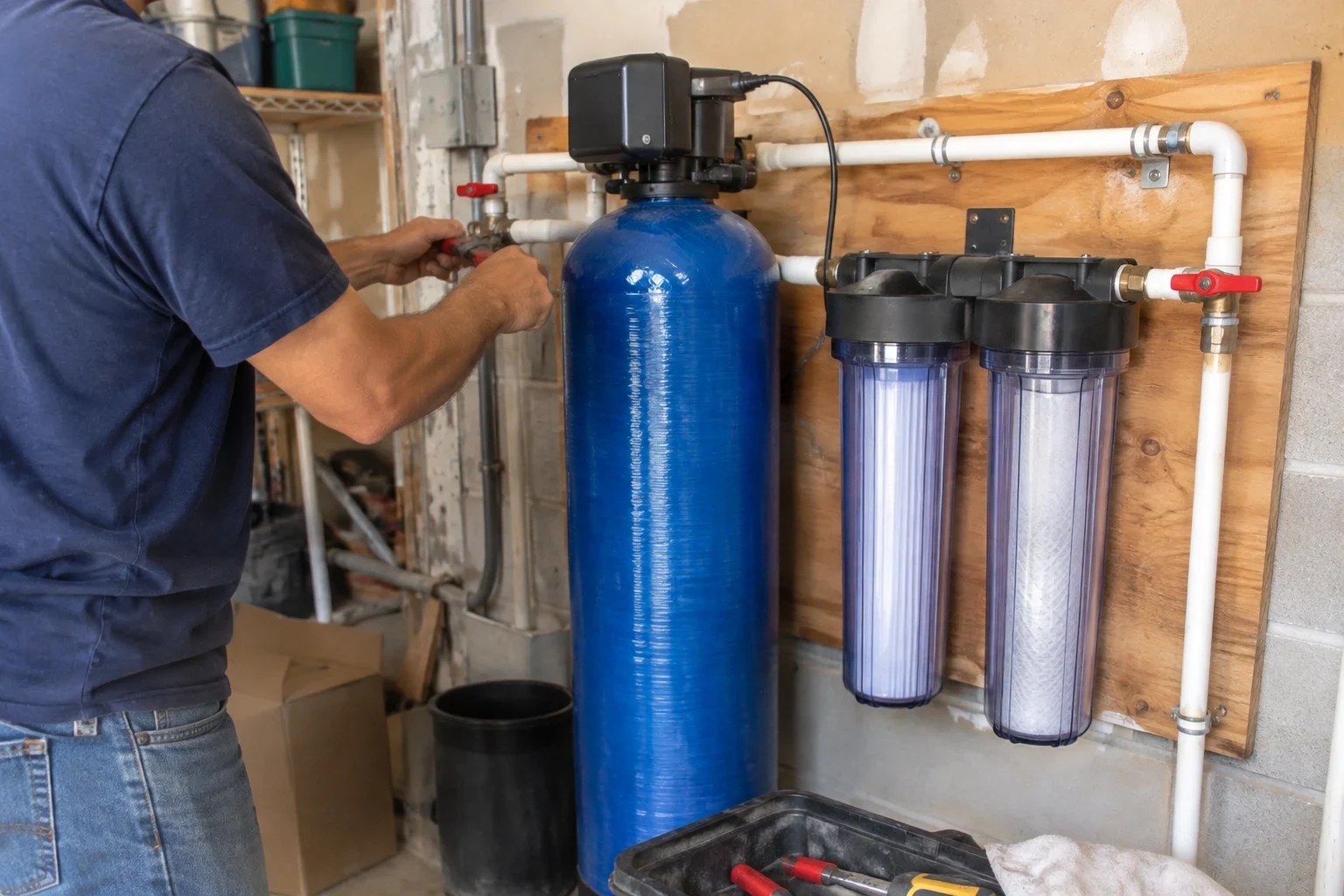
We put a sediment stage and a carbon stage on your main line, so the kitchen, the showers and the washer all draw filtered water. After that we stay on it, changing cartridges and checking media so the system and your plumbing hold up for years.
How point-of-entry filtration works and who it suits
Point-of-entry filtration treats water at the main line, downstream of the meter and upstream of the water heater. First comes a sediment stage that holds back sand, rust flakes and loose pipe scale. Then the water moves through activated or catalytic carbon, which adsorbs chlorine, chloramine and the compounds that cause odd tastes and smells. Since all incoming water passes through it, your showers, ice maker and washing machine get the benefit along with the kitchen faucet.
It makes the most sense when the complaint is a bleach smell, a musty flavor or grit turning up in faucet screens and toilet tanks. Carbon does not soften water and leaves hardness minerals in place. If white scale is building on your fixtures as well, we start with a test and then talk about whether a softener should go on the line too. Our Water Softeners page explains that side.
Carbon cleans water by surface contact, and those surfaces slowly load up. Size the system right and service it on time, and it keeps performing. Leave it alone, and chlorine gradually breaks through while flow may tighten. So for us, putting the system in is the first part of the job, and keeping it working is the rest.
What goes into the job
- 01
Sizing for real demand
We check the main line diameter, count bathrooms and ask how many fixtures run at the same time. Carbon only works with enough contact time, so a vessel that is too small lets chlorine slip by and loses pressure when two showers are on.
- 02
Sediment stage up front
Ahead of the carbon we mount a sediment filter that traps particles before they can blind the media. Keeping that grit off the carbon does more for its service life than anything else.
- 03
Carbon chosen for your supply
Plain activated carbon takes out free chlorine well. Where the utility treats with chloramine, we specify catalytic carbon because it breaks down that chlorine-ammonia compound far better.
- 04
Bypass and isolation valves
We fit a bypass and a shutoff on each side of the system. That lets us change filters or service the unit while your home stays on water, or with only a brief interruption.
- 05
Installation of the system
Our offer of free installation covers tying the system into your main line, flushing the media and taking a pressure reading once everything is running.
- 06
Care once it is running
Our full services after the sale include scheduled cartridge changes, carbon replacement and inspections of valves and fittings. Each system also carries a lifetime warranty.
Questions about Whole-Home Filtration?
Call(281) 942-4161Signs your home needs whole-home filtration
Bathroom smells like a pool
Hot water releases chlorine as a gas, which is why a closed-up shower is where the smell is strongest. A carbon stage on the incoming line strips it out upstream of the water heater, so no tap or shower in the house carries it.
Sand in faucet screens
When aerators and toilet tanks collect fine grit or rust specks, sediment is riding in on the line. Left alone, it chews up washers and fill valves.
Water that tastes wrong
A bleachy or earthy flavor usually traces back to disinfectant or organic compounds, both of which carbon adsorbs well.
Skin and hair feel dry
Some people notice this on chlorinated water. Treating where the supply enters covers every shower in the house instead of fitting filters one head at a time.
An older filter losing flow
If you already own a system and pressure has sagged, a clogged sediment cartridge or exhausted carbon is the usual cause. We service existing units and will tell you if a filter change will fix it or it is time to replace.
What happens on installation day
- 1
A call about your water
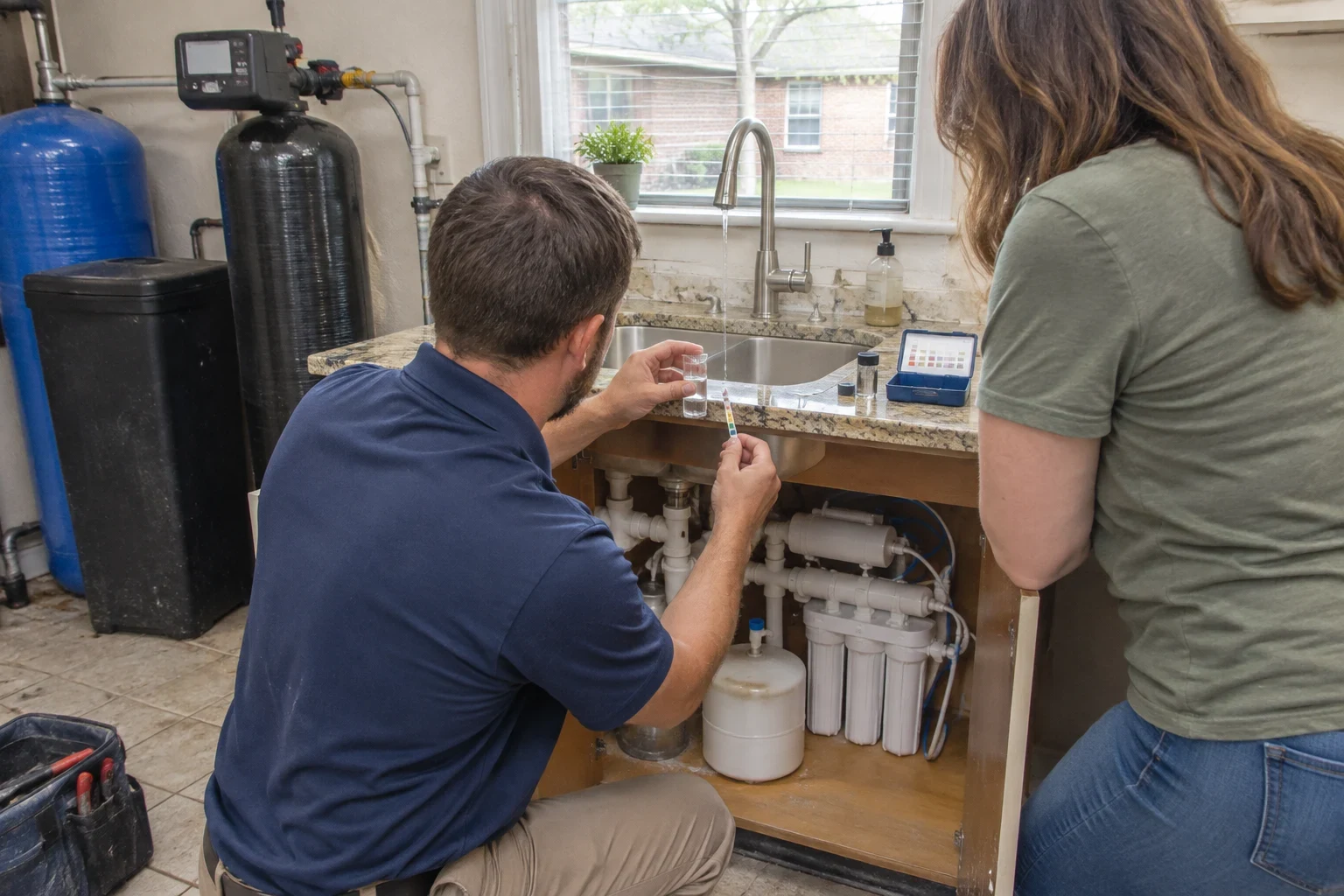
It begins on the phone. We ask if your home runs on city water or a private well, what you notice at the faucet and how big the house is. If hardness or iron could be part of the picture, we recommend water testing before we choose equipment.
- 2
Choosing the spot
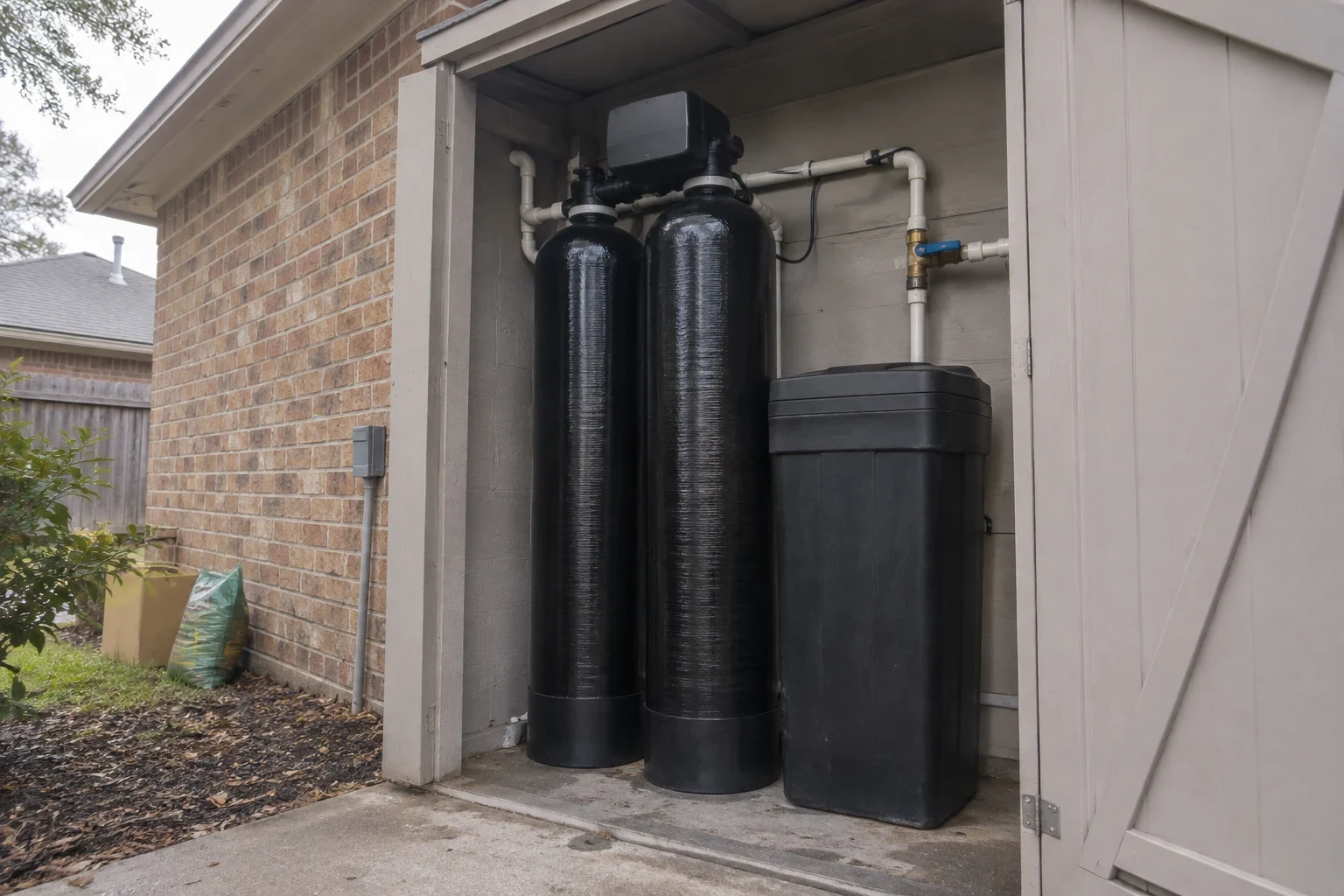
We trace the main to where it enters, which is often by the garage or along an outside wall. The spot we pick needs room for the vessels, a level pad and clear access for filter changes later.
- 3
Tying into the main
With the water off, we install the bypass and shutoff valves, set the sediment housing ahead of the carbon and join everything with fittings matched to your pipe material: copper, PEX or CPVC. Before the house gets water, we rinse the carbon to wash out fine dust.
- 4
Checks and handoff
We turn the water back on, look over every joint for drips and compare pressure readings from before and after. Then we show you how to use the bypass and leave a written record of each filter and its next change date.
What sets the price of a system
Two things decide the price: the equipment your home needs and the conditions where the main line comes in. There is no one package that fits every house. When you call, we go through each part so you can see where the money goes. Since installation is part of our offer, most of the cost is the equipment and its media.
- Flow rating and tank size
- A house with four bathrooms and a 1-inch main needs a larger vessel than a two-bath home on a 3/4-inch line. The extra media keeps contact time up and pressure steady at peak use.
- Which carbon goes in
- Catalytic carbon, used where the water is treated with chloramine, is priced above standard activated carbon. A specialty stage aimed at one particular problem also raises the total.
- Cartridges or a media tank
- A cartridge housing is cheaper to buy, but you replace cartridges more often. A backwashing or upflow carbon tank is the larger first expense and goes much longer before the media is due.
- Space and pipe conditions
- A cramped closet, an aging main or a change from copper to PEX or CPVC at the tie-in means more fittings and more labor.
Questions about whole-home filtration
How often do the filters need changing?
The sediment cartridge is the one that fills fastest, usually needing a swap a few times a year depending on how much grit the water carries. Carbon runs far longer. Its interval depends on vessel size, how much water your household uses and the disinfectant level coming in. We work out a schedule for your home and take care of the changes through our service after the sale.
Will filtering at the main line reduce my water pressure?
With equipment matched to your flow, the loss is slight and most families never feel it. Noticeable drops come from a housing that is too small or a sediment cartridge packed with debris. We take a gauge reading before the system goes in and again after, so you see the numbers yourself.
Does whole-home filtration soften water?
It does not. Carbon takes out chlorine, odors and some organic compounds, but calcium and magnesium pass right through. Scale on fixtures calls for a water softener, and a hardness test tells us whether your home needs one.
Should I add reverse osmosis at the kitchen sink too?
In plenty of homes, carbon at the main line is all it takes for water that tastes good at every tap. Reverse osmosis goes a step further for drinking and cooking, pulling out dissolved solids and trace contaminants that carbon misses. Some families run both, and the upstream carbon also shields the RO membrane from chlorine damage.
How long have you been doing this, and what is the warranty?
Our company has been in business 13 years. The whole-home systems we install carry a lifetime warranty, and on the phone we will go over exactly what it covers for the equipment you choose.
Talk through a system built to keep running
Tell us what you notice at the tap and how your home is plumbed. We will recommend a size and media type, explain the cost and set up the service schedule that keeps it working.