ServicesWater Softeners
Water Softeners in Humble, TX
We test your water, size the resin tank and control valve to your hardness and household use, then keep the softener regenerating correctly. Set up right, a softener protects your water heater, fixtures and appliances from scale for years.
How ion exchange softening works
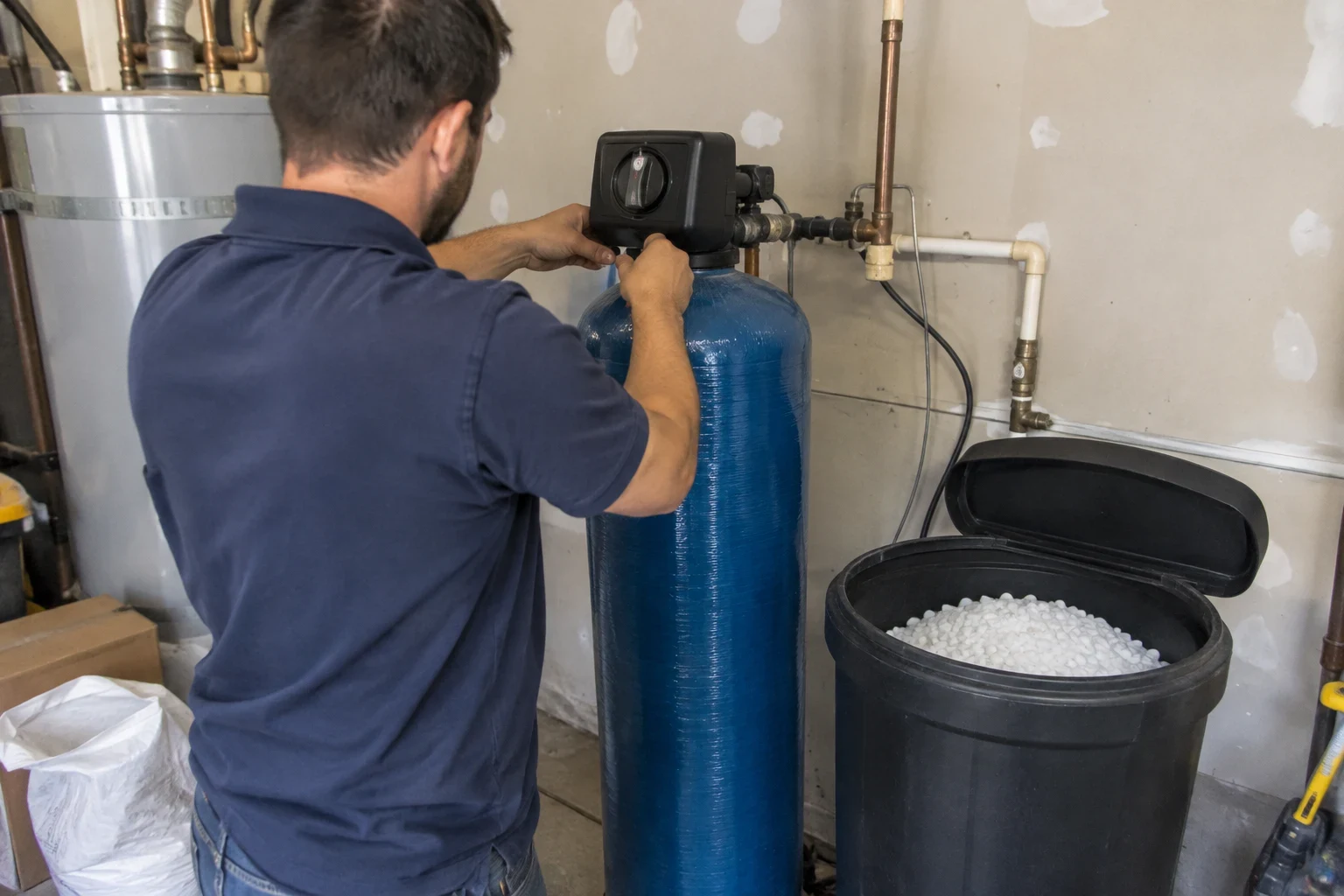
Calcium and magnesium dissolved in your water are the minerals that leave scale in pipes, heaters and fixtures. A softener removes them through ion exchange. The mineral tank holds resin beads loaded with sodium or potassium ions, and as water passes through, the beads trade those ions for calcium and magnesium. When the beads are saturated, the control valve runs a regeneration cycle: it draws brine from the salt tank, rinses it through the resin and flushes the captured minerals down the drain.
A softener is the right call when a test confirms meaningful hardness. It does nothing for chlorine taste or smell, which carbon handles, as covered on our whole-home filtration page. So we measure first and size the system to the grains per gallon your water really contains.
In 13 years in business, we have found that most softener trouble traces back to a unit sized wrong or never maintained, not to the hardware. That is why our work continues well after the install.
What our softener service includes
Hardness and iron testing
We measure hardness in grains per gallon and check for iron before recommending anything. Iron coats resin beads and cuts their capacity, so it changes how we set up the system.
Resin tank sizing
Capacity is matched to your hardness, the number of people in your home and daily water use. A tank that is too small regenerates constantly and burns salt; one that is too large can let water sit and channel through the bed.
Installation with a bypass valve
We connect to your main line or an existing softener loop, add a bypass valve, and run the drain line with a proper air gap so wastewater cannot siphon back. We offer free installation.
Control valve programming
We enter your measured hardness, set the salt dose and schedule regeneration for overnight hours when no one is drawing water. Metered valves regenerate based on actual gallons used, which saves salt and water.
Service after the sale
We provide full services after the sale: breaking up salt bridges, cleaning the brine injector and screen, replacing worn valve seals and cleaning fouled resin. Small fixes like these keep the original equipment working instead of replacing it.
Signs your home needs a softener, or service on the one you have
White crust on fixtures
As hard water evaporates on a showerhead, faucet tip or shower glass, it leaves calcium carbonate behind as a chalky film that keeps thickening.
A water heater that rumbles
Mineral sediment collects in a layer at the base of a tank heater, and water caught beneath it flashes to steam, making popping and rumbling sounds. That layer also insulates the burner or element, which makes the heater work harder and wear out sooner.
Spotty dishes and weak lather
Calcium and magnesium react with soap, so shampoo barely foams, skin feels filmy and glasses come out of the dishwasher spotted.
Salt level never drops
If the salt in your brine tank stays put for weeks, a hard crust called a salt bridge has likely formed. The softener regenerates with plain water and stops softening.
Standing water in the brine tank
A brine tank full of water usually points to a clogged injector, a stuck float or a restricted drain line. Each is a repair, not a reason to replace the unit.
How a softener job runs
- 1
Talk it through by phone
You tell us your water source, how many people live in your home and what you are seeing. If you already have a softener, we ask its age and how it has been behaving.
- 2
Test at your home
We measure hardness and iron at a tap. We also note where the main line enters, where a drain line can run and whether an outlet is close enough for the control valve.
- 3
Installation day
We close the main, tie into your softener loop or cut into the main line, and set the bypass, drain line and brine line. The job usually wraps up within a morning or an afternoon, and the water stays shut off only while we make the connections.
- 4
First regeneration and handoff
Once salt and water are in the brine tank, we run the first regeneration and test a tap to confirm soft water. Before leaving, we show you how to add salt, spot a salt bridge and use the bypass valve.
What sets the price of a softener
Your price comes down to the equipment your water calls for and any extra treatment ahead of the resin. We put every line on the estimate in writing and explain it before work starts, so nothing shows up later that you did not expect. An accurate number begins with a hardness test at your home.
- Hardness and household size
- Every added grain per gallon and every added person raises the daily load the resin bed has to absorb. Higher loads call for a larger resin tank and a bigger brine tank to match.
- Timer or metered valve
- A timer valve regenerates on a fixed schedule whether the resin is spent or not, and it is the cheaper part to buy. A demand-initiated, metered valve carries a higher upfront price but regenerates only after a set number of gallons, so it uses less salt and water over its life.
- Plumbing at your home
- A home with an existing softener loop makes the hookup simple. Without a loop, we cut into the main line and route a drain line, which adds pipe, fittings and labor.
- Iron or chlorine in the water
- Iron may call for iron-tolerant resin or a separate iron filter in front of the softener. Chlorine slowly breaks down resin beads, so a carbon prefilter is often worth adding to protect them.
Common questions about softeners
Something not covered here? (281) 942-4161
How do I know if my water is hard enough for a softener?
It depends on where your water comes from and how hard it measures, and that differs between city supply, utility districts and private wells around Humble. We test before recommending equipment. If the number comes back low, we tell you, and a filter may solve your actual complaint better.
How often do I add salt?
That depends on your hardness, your water use and your valve type. Check the brine tank about once a month and keep the salt a few inches above the water line. A metered valve uses less salt than a timer valve because it regenerates only when the resin is spent.
Will softened water taste salty?
The sodium added rises with the hardness removed, and at typical levels most people never taste it. If you want sodium out of your drinking water, an under-sink reverse osmosis unit removes it at the kitchen tap. You can also fill the brine tank with potassium chloride instead of sodium chloride.
What warranty comes with the softener?
Each softener we install carries a lifetime warranty. On installation day we go over the paperwork with you so you know what it covers.
Can you service a softener another company installed?
Yes. We inspect the control valve, injector, resin bed and brine tank, then tell you straight whether a repair or new resin makes more sense than a new unit.
Why does resin wear out?
Chlorine oxidizes the beads over time, and iron coats their surface. Both reduce how much hardness the bed can hold. A carbon prefilter and periodic resin cleaning slow that decline, and both are part of the upkeep we provide.
Keep scale out of your water heater
Tell us about your water and any softener you already have. We will explain what a test would show and what the next step looks like.