ServicesReverse Osmosis
Reverse Osmosis Systems in Humble, TX
We install under-sink reverse osmosis for the water you drink and cook with. It reduces lead, dissolved solids and chlorine taste at one faucet. We size each system to your water pressure and chemistry, then keep the filters and membrane on a schedule so it keeps working.
What reverse osmosis does at your kitchen sink
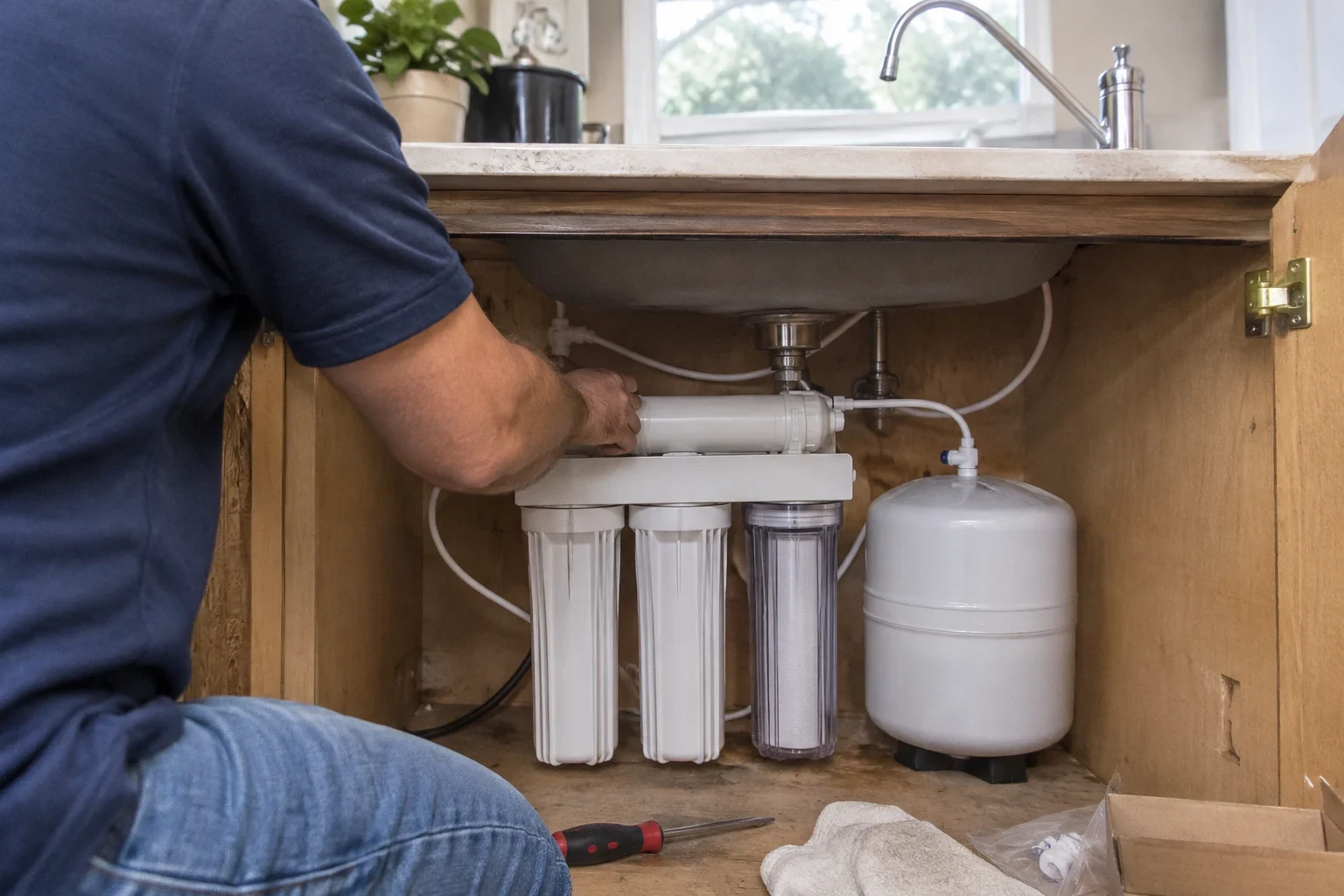
Inside an RO unit, household pressure pushes water through a thin-film composite membrane. Its pores are so small that most dissolved solids cannot pass, including lead picked up from older solder and fixtures. Clean water collects in a compact pressurized tank under the sink and feeds a faucet of its own, while the rejected material rinses away to the drain.
The membrane is the expensive part, and it does not fail on its own. It fails when chlorine or chloramine reaches it and breaks down the polyamide layer, or when hardness and sediment build scale and grit on its surface. That is why we put the work into the prefilters and the change schedule. A well-protected membrane lasts years longer than one that is left to fend for itself.
We have been in business 13 years, and most of the RO calls we see are systems that were installed and then never serviced. Reverse osmosis is the right call when you want better drinking water at one tap. If you want treated water at every faucet and shower, start with our Whole-Home Filtration page instead.
What comes with an RO install
- Sediment prefilter
- A spun polypropylene cartridge catches sand, rust flakes and pipe debris before they reach the finer stages.
- Carbon block prefilter
- This stage removes chlorine and chloramine. It protects the membrane and takes out the pool-water taste.
- Membrane, tank and postfilter
- The thin-film membrane does the main reduction. A bladder tank, precharged with air, holds the finished water, and a carbon postfilter polishes taste on its way to the faucet.
- Faucet, drain and shutoff valve
- We mount a dedicated faucet, connect the drain line with a proper saddle and air gap where needed, and fit an automatic shutoff valve so the system stops sending water to the drain once the tank is full.
- Fridge and ice maker line
- If you want filtered ice and door water, we run a line from the RO tank to the refrigerator and check the fittings for weeps.
- Service after the sale
- We install at no charge, and our full services after the sale mean the crew that set up your system is the one that returns to maintain it. Filter and membrane change dates are based on your water readings, not a generic calendar.
Signs an RO system would help, or yours needs service
You buy bottled water
If the tap water tastes of chlorine and you buy cases every week, an RO faucet gives you that water at the sink.
Older plumbing in the house
Lead solder and older brass fixtures can add lead at the tap even when the supply is clean. RO is one of the more reliable point-of-use ways to reduce it.
The tank fills slowly
A tank that never seems full usually means clogged prefilters, a fouled membrane or a bladder that has lost its air charge.
Taste has drifted back
When chlorine or a flat, salty taste returns, the carbon is spent or the membrane is passing more solids. A TDS reading tells us which.
Water runs to the drain nonstop
A failed shutoff valve or check valve lets the system keep draining even with a full tank, wasting water all day and night. It is a small part, and it is often what kills an otherwise good system.
How an RO job goes
- 1
Read your water first
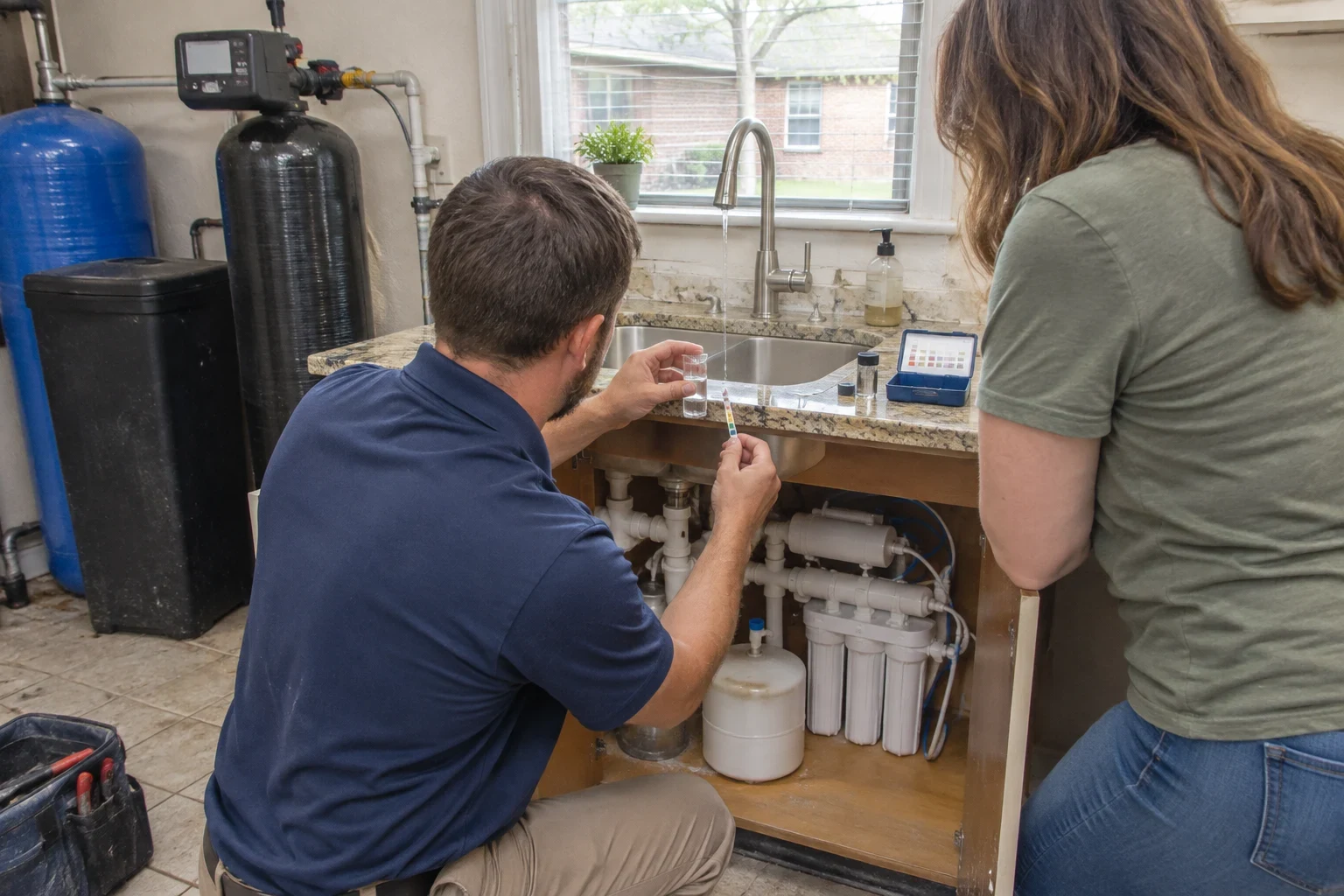
We check total dissolved solids, hardness, chlorine and incoming pressure at the kitchen. Hard water or low pressure changes what we recommend. If you want a full lab picture, see our Water Testing page.
- 2
Pick the configuration
We match the membrane size, tank and any add-ons to your household and your cabinet space. If pressure sits under about 40 psi, we discuss a booster or permeate pump, because the membrane produces poorly without it.
- 3
Install day
Most installs take a few hours. We clear and protect the sink cabinet, drill the countertop or use the existing sprayer hole, mount the manifold, make the connections and pressure-check every fitting.
- 4
Flush and verify
New carbon and membranes need flushing before first use. We drain the first tanks, take a TDS reading at the faucet and show you the before and after numbers.
- 5
Set the service schedule
You leave with dates for prefilter, postfilter and membrane changes. We handle those visits so the membrane stays protected.
What moves the price of an RO system
We quote by phone after a few questions about your home and water, and we explain each line before anything is installed. Installation is free; the total depends on the equipment and what your water demands of it. We would rather fit the system to your water than sell the largest unit on the truck.
- System configuration
- Stage count, membrane capacity and tank size set the base. A tankless or permeate-pump unit costs more but wastes less water.
- Water pressure
- Low incoming pressure may call for a booster pump, which adds a part and a power connection under the sink.
- Hardness and sediment
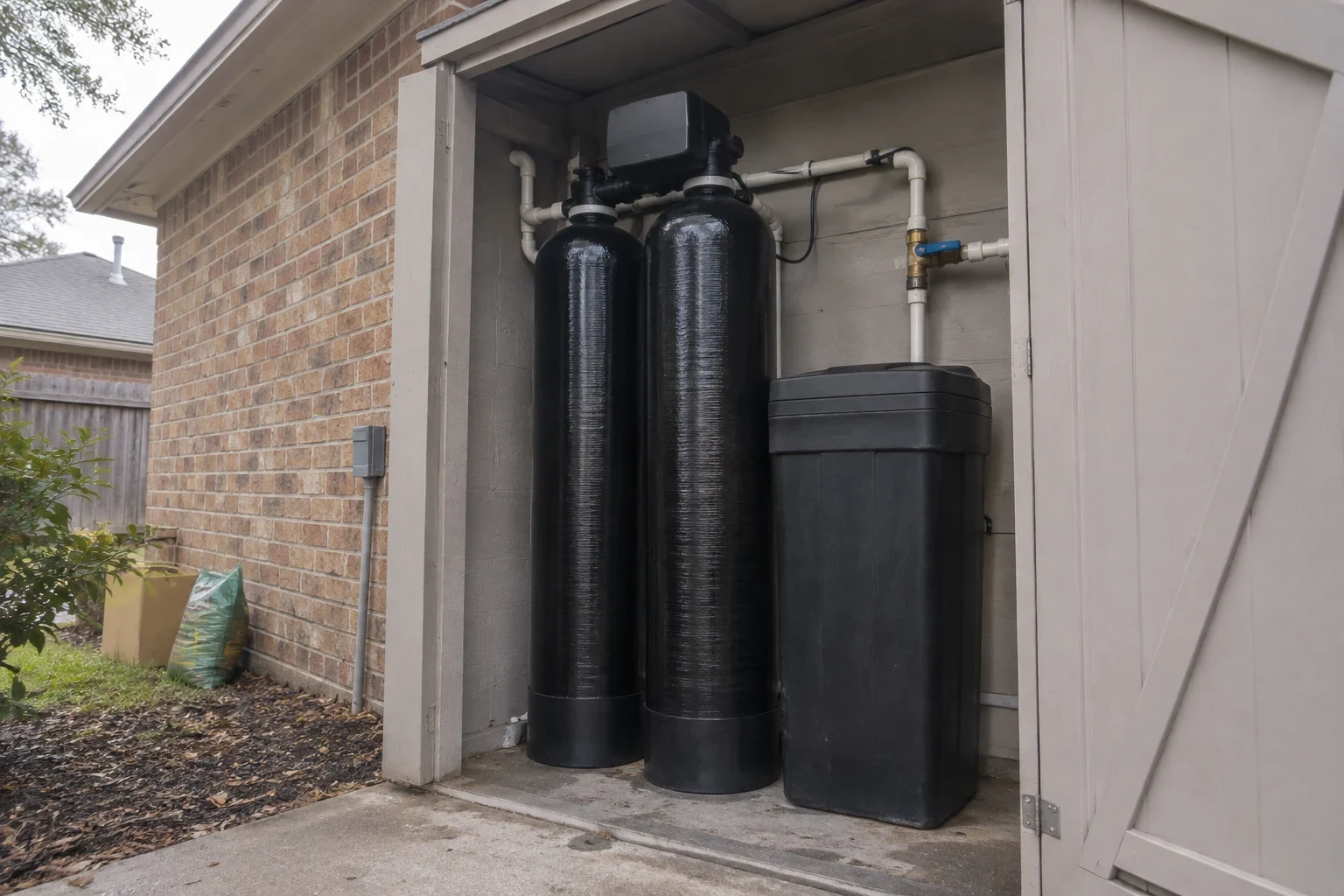
- Hard water scales membranes faster. Sometimes the better long-term buy is a unit from our Water Softeners page ahead of the RO, which we will only suggest if your numbers show it.
- Additional connections
- Each added outlet, such as a fridge door dispenser, an ice maker or a bar sink faucet, needs its own run of tubing, more fittings and extra labor.
Reverse osmosis questions
Something not covered here? (281) 942-4161
What is the replacement schedule for the cartridges and the membrane?
Plan on fresh prefilters every six to twelve months. Gritty water or a heavier chlorine load wears out the sediment and carbon stages faster. If those stages are replaced on time, a membrane often lasts two to four years. We set your dates from your own test readings and handle the changes for you.
How much water does an RO system send to the drain?
Standard systems reject several gallons for each gallon they make, and the ratio worsens with low pressure. A working shutoff valve keeps it from running when the tank is full. Permeate-pump and higher-efficiency units cut the waste noticeably.
Does RO water taste flat?
Because it removes most dissolved minerals, some people find the taste flat. A remineralizing postfilter adds calcium and magnesium back. Our Alkaline Water Systems page covers that option in more detail.
What warranty comes with the system?
Our reverse osmosis systems carry a lifetime warranty. Ask us on the phone and we will walk you through what it covers for the unit you choose.
Can you service an RO system someone else installed?
Yes. We check the membrane with a TDS reading, test the tank air charge, replace spent filters and swap failed valves. If the housing or manifold is cracked, we tell you plainly whether repair or replacement makes more sense.
Get drinking water you can count on for years
Tell us how your water tastes and what is under your sink now. We will explain what system fits and how we will keep it running.