ServicesWell Water Treatment
Well Water Treatment in Humble
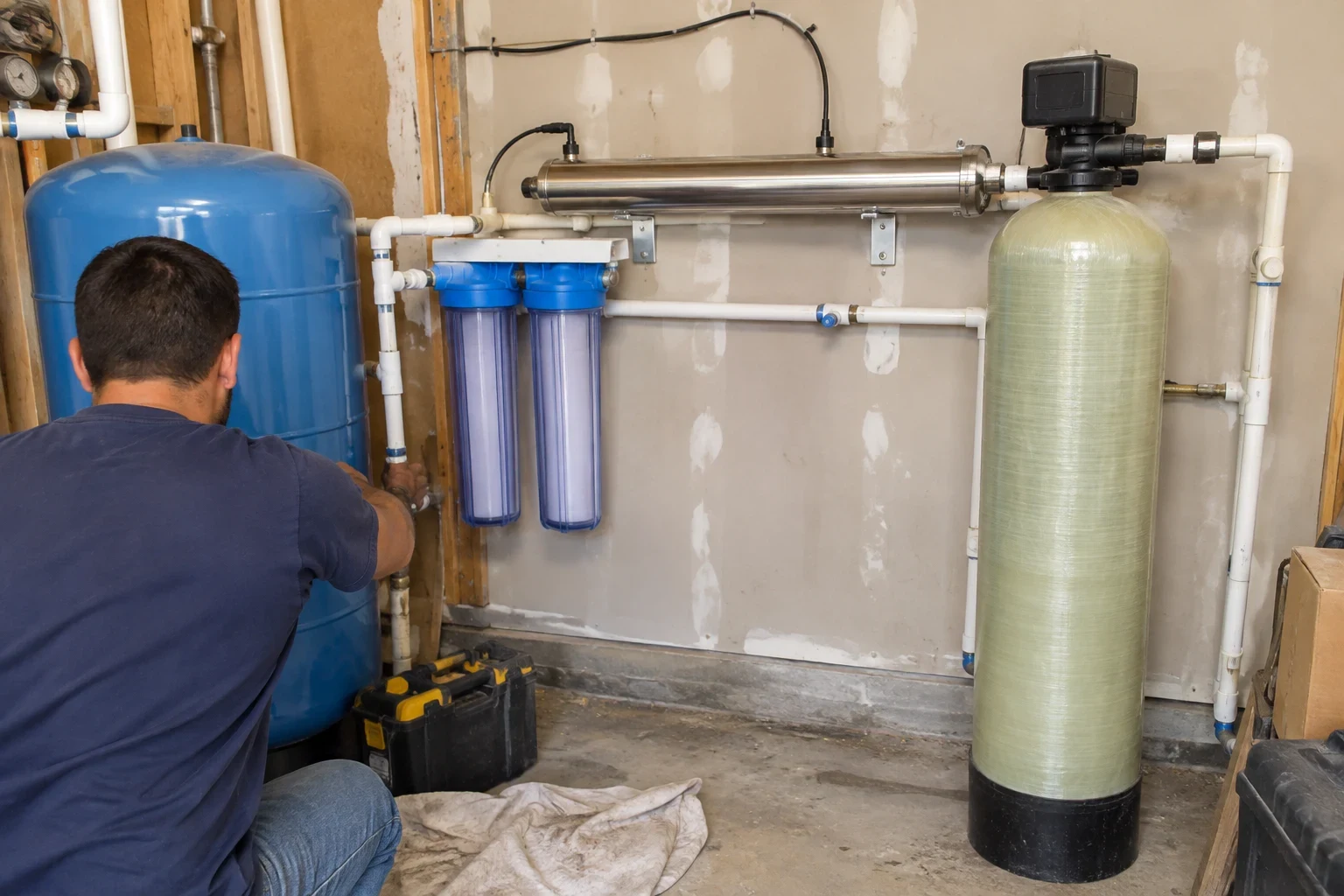
We treat private well water for iron, rotten-egg odor, sediment and bacteria, using equipment sized to your test results and your pump's flow rate. Then we keep servicing it, so the system and the plumbing behind it last.
Built around what your well actually produces
No utility treats well water on its way to your faucet. The water you get reflects the formation your well taps, the depth of the casing and whatever has shifted around the wellhead over the years. Around Humble, the usual culprits are dissolved iron, hydrogen sulfide and fine sand, and bacteria can appear after a heavy rain or when a well cap cracks.
Those problems don't share a single cure. Iron and sulfur stay dissolved until something converts them to solids, and only then can a media bed hold them. Sand has to be screened out at the very start, otherwise it clogs every stage after it. Bacteria need disinfection, most often from an ultraviolet lamp. So we test first and design the system from the results, rather than putting the same unit on every well.
Treating the water also protects the equipment already in your home. Iron and grit wear down pump impellers, plug faucet aerators, stain sinks and tubs, and leave deposits inside your water heater. Pulling them out right after the pressure tank helps all of that last longer.
What a well treatment system from us includes
- 01
Sediment pre-filter
The first stage is a spin-down screen or a cartridge filter that stops sand and grit. Keeping it clean costs little, and it spares the treatment media and your fixtures from abrasive wear.
- 02
Iron and sulfur filtration
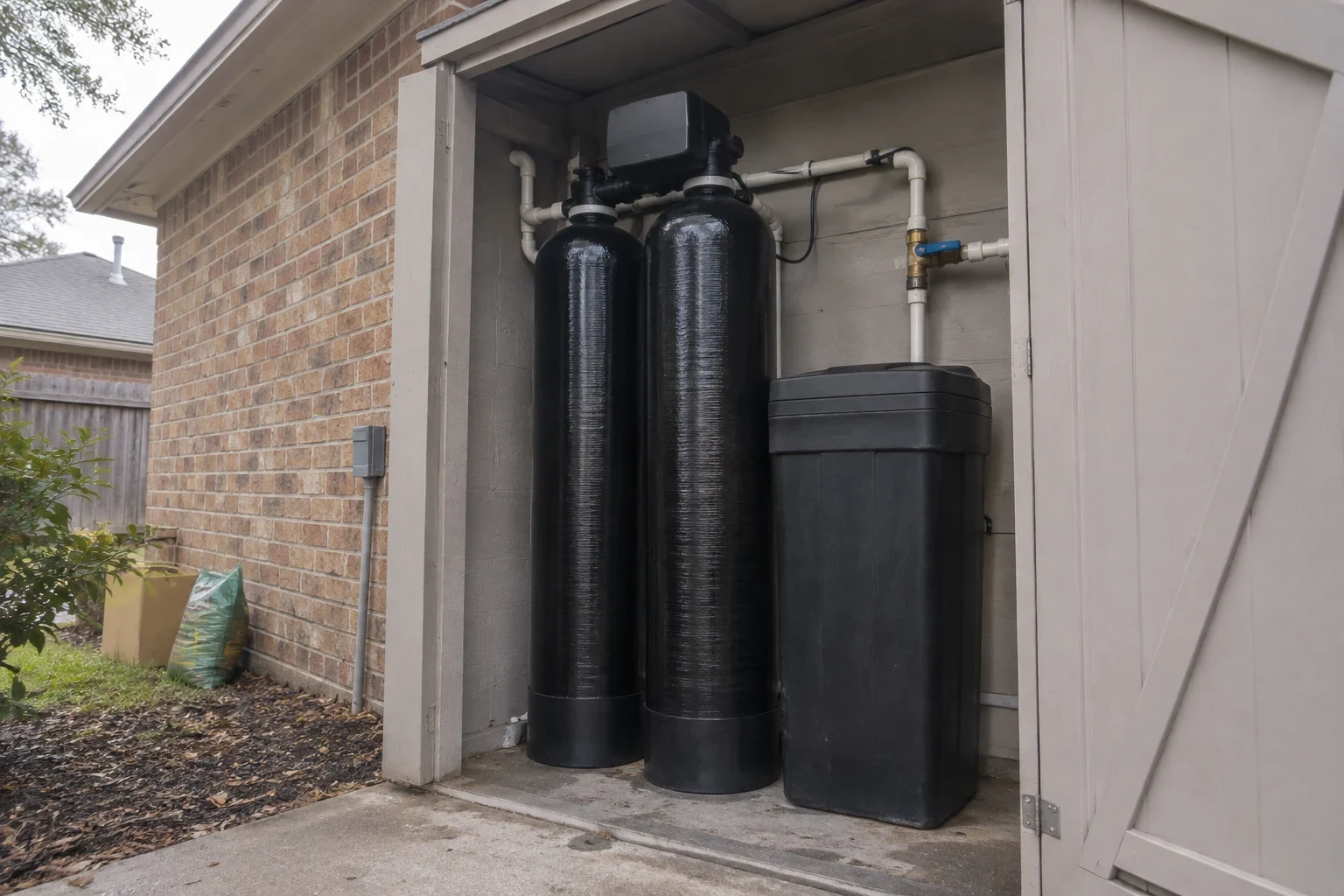
Dissolved iron, manganese and hydrogen sulfide are usually handled by an air-injection oxidizing filter. A pocket of air held at the top of the tank turns those dissolved minerals into solid particles, the media bed holds onto them, and a timed backwash sends them down the drain.
- 03
UV disinfection
If coliform bacteria turn up in your test, we add an ultraviolet chamber that exposes every gallon to UV light on its way through. No chemicals enter the water, and the lamp is replaced roughly once a year.
- 04
Bypass valve and drain connection
We fit each system with a bypass so your home still has water while we work on it, and we run a drain line with a proper air gap for the backwash.
- 05
Free installation
Installation comes free with the system. That covers the plumbing at the pressure tank and programming the control valve's backwash schedule.
- 06
Full services after the sale
We return for media checks, lamp and cartridge replacement and valve adjustments. The equipment is backed by a lifetime warranty.
Questions about Well Water Treatment?
Call(281) 942-4161Warning signs your well water needs treatment
Rust stains on fixtures
Orange rings in the toilet bowl and brown streaks down the tub are classic signs of dissolved iron. The same iron discolors laundry and gradually coats the inside of your pipes.
A sulfur odor
A rotten-egg smell comes from hydrogen sulfide. When you notice it only from the hot tap, sulfate-reducing bacteria may be reacting with the magnesium anode rod inside your water heater.
Sand in faucet screens
Grit collecting in aerators or settling in the toilet tank means sediment is slipping past the well screen. It abrades valves and fixtures and puts extra wear on your pump.
Slime inside the toilet tank
A reddish or black film is frequently iron bacteria. Left alone, it narrows lines and makes iron harder to remove.
A failed or overdue bacteria test
If a year has passed since your last test, or coliform showed up in a recent one, disinfection and a retest come first.
From first test to yearly service
- 1
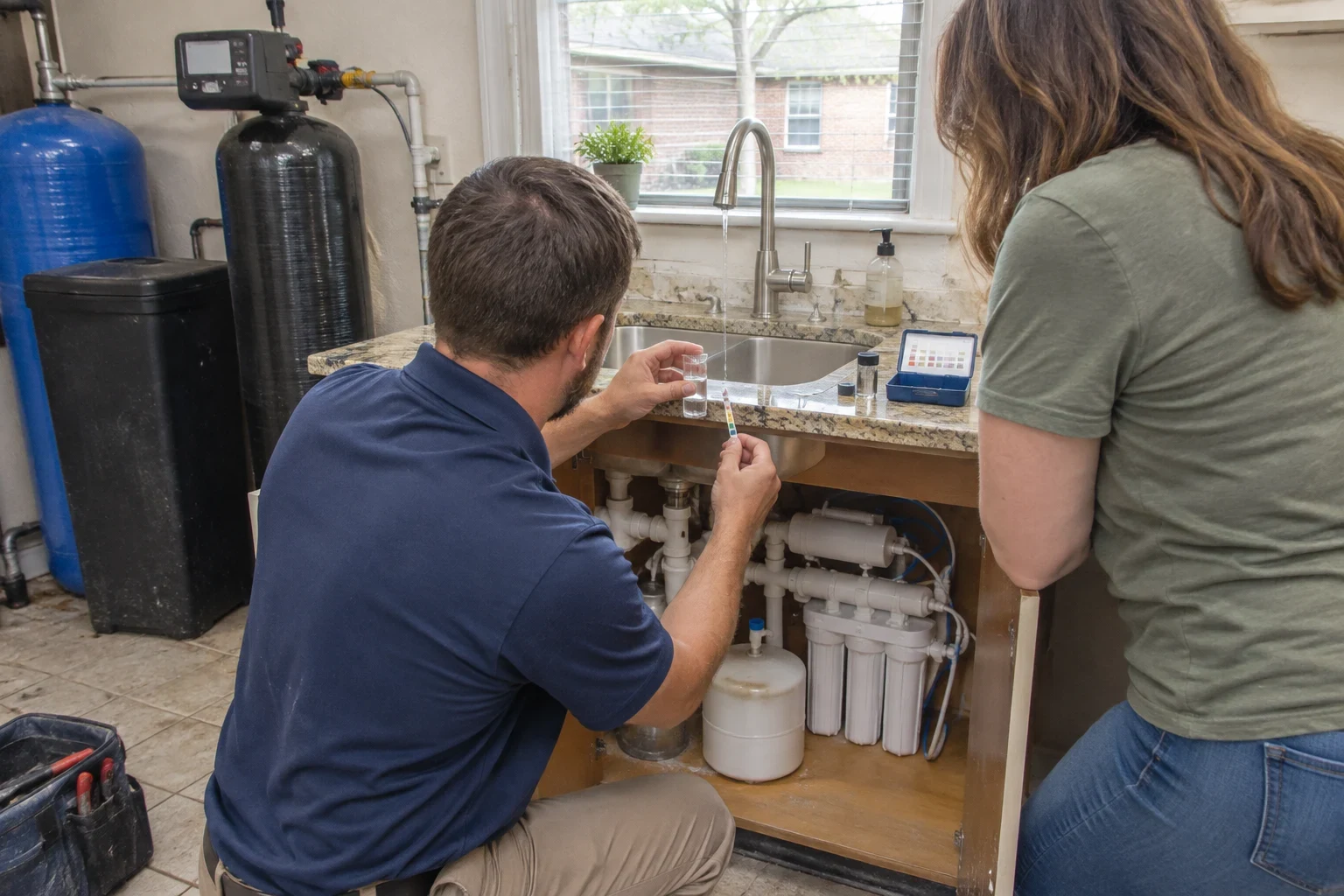
Run a full water test
Every job begins with Water Testing for iron, manganese, hydrogen sulfide, hardness, pH and bacteria. We look closely at pH, since an oxidizing filter struggles when the water runs acidic.
- 2
Measure flow and inspect the tank
We clock your pump's output in gallons per minute and check the pressure tank and pressure switch. A backwashing filter can only clean its bed if the pump delivers enough flow, so these readings decide the tank size.
- 3
Plumb it in after the pressure tank
The stages go in sequence: sediment first, then iron and sulfur, then UV. Most installs fit within part of a day, and your water is shut off only while we cut in the bypass.
- 4
Program the valve and show you around
We set the backwash to run overnight, flush the new system and point out the bypass handle and the few things worth keeping an eye on.
- 5
Confirm results and keep it running
A second test verifies the treatment is working. From there, we take care of the scheduled service that keeps the media and the UV lamp effective.
What moves the cost of well water treatment
The price depends on what your test finds and how many stages it takes to fix it. A well with only sediment needs far less equipment than one with iron, sulfur and bacteria together. We explain each piece when you get your quote by phone, and installation is free.
- Contaminant levels
- Higher iron or hydrogen sulfide readings need a larger media tank or a different oxidation method to keep up.
- Number of treatment stages
- Each problem gets its own stage. Adding UV or a water softener after iron removal adds equipment and parts.
- Pump flow rate
- A low-output pump may limit which backwashing filters will work, which affects the tank size we can use.
- Space and plumbing at the tank
- Tight wellhouses, old galvanized pipe or no nearby drain or outlet can add parts and labor to the install.
Questions about treating well water
How often should I test my well?
Check for bacteria every year, and again after a flood or any repair to the pump, casing or cap. Every few years, run a full mineral panel as well. Iron and sulfur readings can drift over time, and a shift may mean your filter's backwash settings need adjusting.
Will treatment lower my water pressure?
Not much, if the equipment fits your well. Noticeable pressure loss usually traces back to a tank that is too small for the household's demand or a cartridge left in place long past its change date. That is why we measure your pump's output before picking a system and keep filters on a schedule afterward.
Do I need a water softener too?
Only if the test shows enough hardness to leave scale. Iron has to come out first, since it coats and fouls softener resin. When a softener is warranted, we plumb it in after the iron filter.
What maintenance does the system need?
Sediment screens or cartridges get cleaned or swapped every few months. The UV lamp is replaced about once a year, and the oxidizing media wears out slowly and is replaced when it stops performing. All of that falls under our full services after the sale.
Is the equipment covered?
Yes. Every system we install carries a lifetime warranty. We have been in business 13 years, installing and servicing these systems for homeowners in Humble and the surrounding area.
Find out what your well needs
Tell us what you are seeing, smelling or finding in your fixtures. We will explain how we would test it and what kind of system usually fixes it.