ServicesWater Testing
Water Testing in Humble
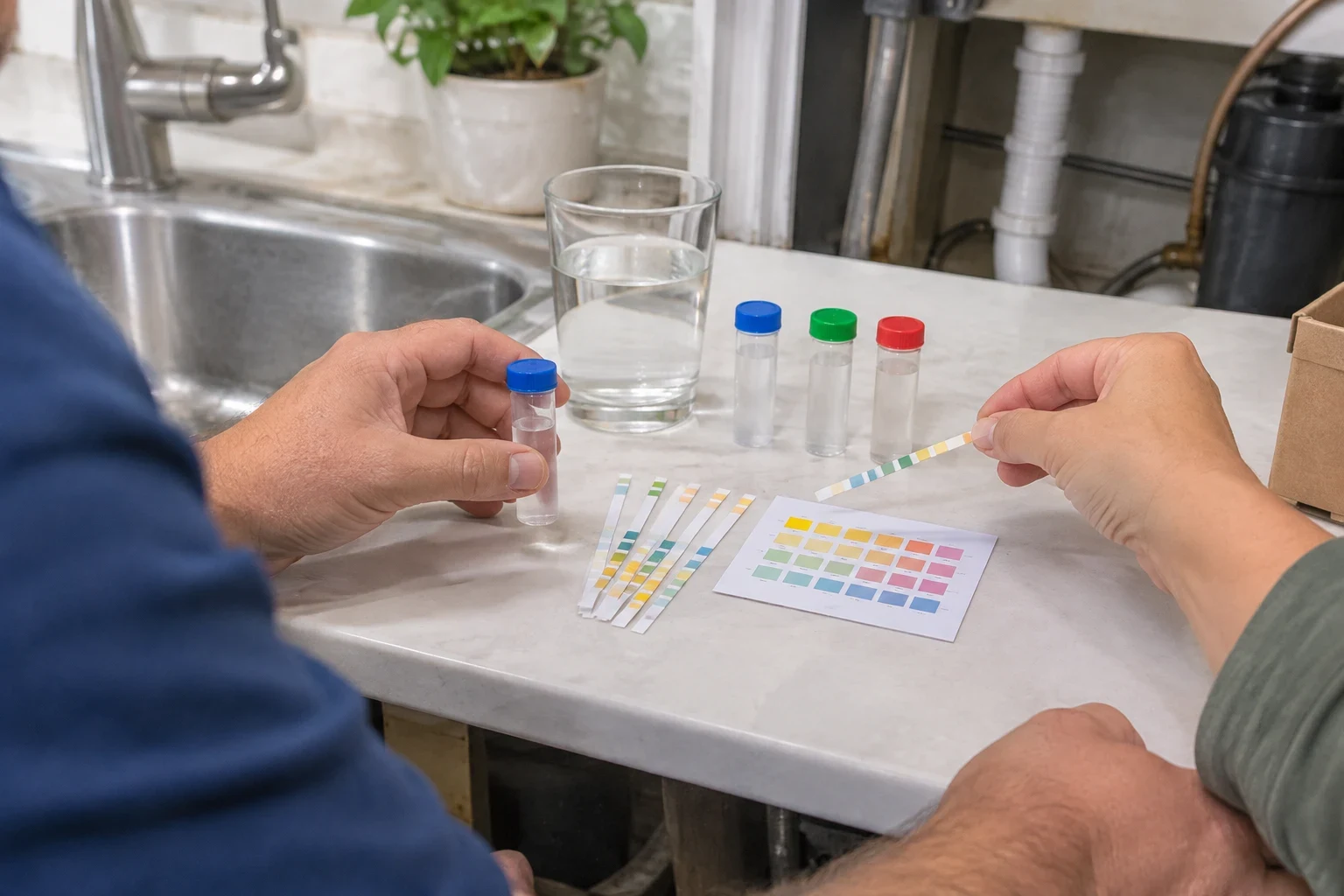
We test the water coming into your home for hardness, iron, pH, dissolved solids and disinfectant, then walk you through every reading. You get real numbers to decide from, and a baseline we can compare against later to see how your plumbing and any equipment are holding up.
Numbers First, Equipment Second
Most water problems show up as symptoms: white crust on a faucet aerator, an orange ring in the toilet bowl, a pool-water smell from the shower. Each symptom has more than one possible cause. Scale can come from calcium and magnesium hardness, staining from dissolved iron or manganese, odor from chlorine, chloramine or hydrogen sulfide. A test tells us which one you actually have, and how much of it.
That matters because the wrong equipment wears out early or does nothing. A softener will not remove chlorine taste. A carbon filter will not stop hardness scale. Sized against measured numbers, a system lasts longer and its media gets replaced on a predictable schedule instead of by guesswork.
We have been in business 13 years, and we treat a first test as the start of a record for your home. Retesting a year or two later shows whether a filter is still doing its job, whether a softener resin bed is tiring, or whether something in the supply has changed.
What a Water Test Covers
- Hardness in grains per gallon
- We read calcium and magnesium levels at the tap and give you the result in grains per gallon. That reading tells us if your home needs a softener in the first place, and if it does, what capacity will keep up with your household's use.
- Iron and manganese
- Dissolved iron turns orange-brown once it contacts air, and manganese leaves black or gray marks. Even low concentrations coat softener resin and clog filter cartridges, so we check for both.
- pH and total dissolved solids
- Water with a low pH can slowly eat at copper pipe and leave blue-green stains around fixtures. A TDS meter adds up the minerals and salts the water carries, and that total shows whether reverse osmosis is worth a look for drinking water.
- Chlorine or chloramine
- On city water we measure the disinfectant residual, because that is what most people notice in taste and smell. Knowing which disinfectant is present also tells us which grade of carbon will take it out.
- Well water add-ons
- For private wells, we can also arrange samples for coliform bacteria, nitrates and sulfur compounds. These need careful collection and lab analysis, and we explain how the sample is handled before we draw it.
Signs It Is Time to Test Your Water
Crust on fixtures and glass
White or chalky buildup on showerheads, faucet aerators and dishes points to hardness. A test confirms the level before you spend money on a softener.
Rust-colored stains
Orange rings in toilets, tubs or on laundry usually mean iron. If the stains are black or gray, manganese is a likely cause.
A change in taste or smell
A sudden chlorine taste, a rotten-egg smell from hot water or a metallic flavor all have different causes. Testing separates the water supply from the water heater and the pipes.
An older system that seems tired
If your filter or softener has been in for years and the symptoms are creeping back, a retest shows whether the media is spent or the water itself has changed.
You rely on a private well
Many homes outside city limits draw from their own wells, and no utility tests that water for you. Regular testing is the only way to know what is in it.
How a Test Visit Runs
- 1
We talk through what you are seeing
On the phone we ask about stains, odors and the age of your plumbing, and if your home draws from city mains or a private well. That tells us which tests to bring.
- 2
Sampling at the right taps
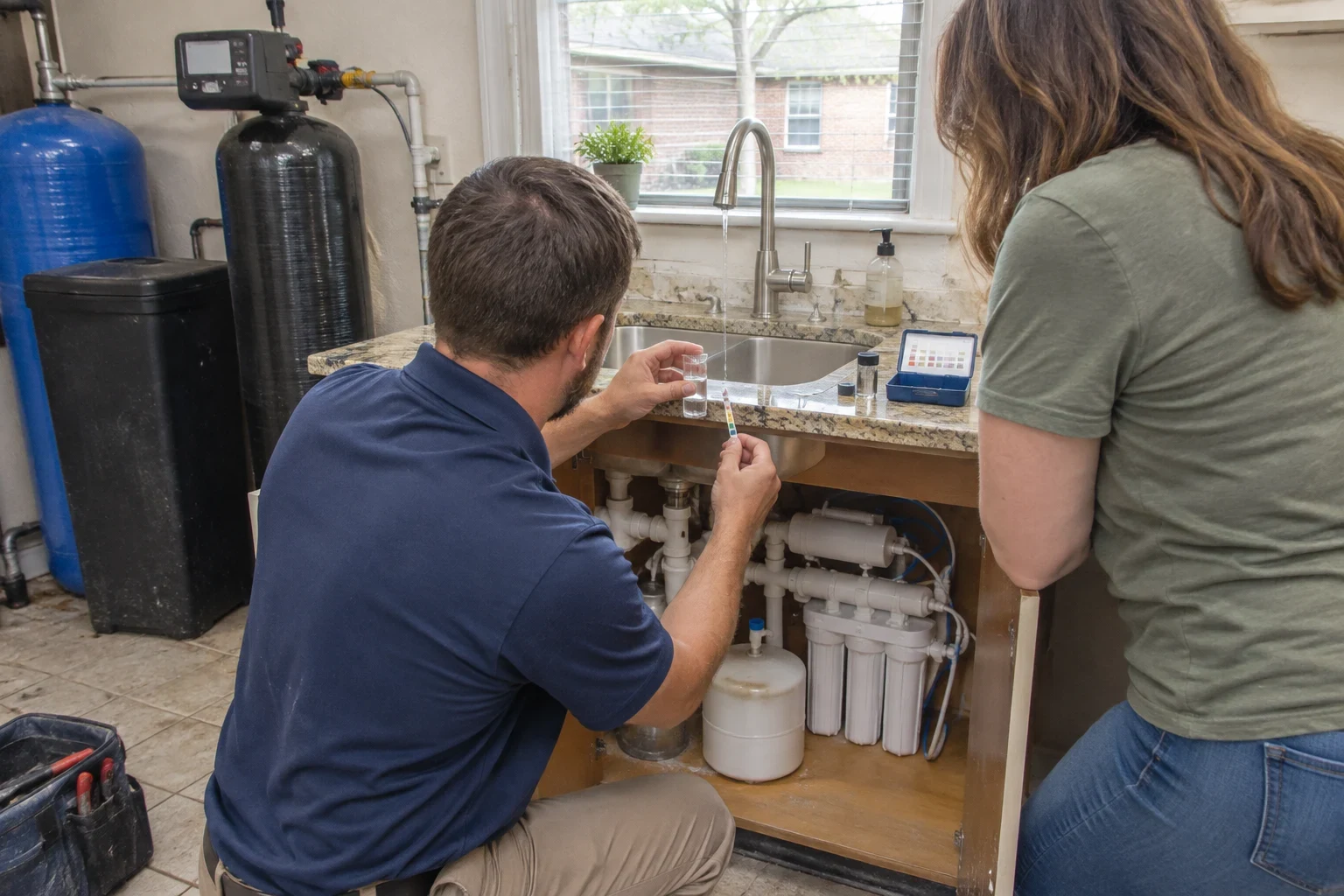
We usually draw from the kitchen tap and from a point before any existing treatment equipment, so we can compare raw water with treated water. For a well, we sample as close to the pressure tank as practical.
- 3
On-site readings, explained as we go
Hardness, iron, pH, TDS and disinfectant can be read in your home. We show you each result and what range it falls in. Lab samples, when needed, are sealed and sent out with the results reported back to you.
- 4
A written summary and an honest answer
You get the numbers in writing with our recommendation. Sometimes that is a specific system, sometimes it is a cartridge change, and sometimes it is nothing at all.
What Shapes the Cost of Water Testing
Two things drive the price: the length of the test list and whether any of it has to go to a lab. We settle the scope with you on the phone, so you know what the visit covers before we arrive.
- Number of parameters
- A basic panel of hardness, iron, pH, TDS and chlorine takes less time and fewer reagents than a full workup that adds manganese, sulfur and other checks.
- Lab analysis
- Bacteria, nitrates and lead require lab work with chain-of-custody handling. Each added lab test adds cost.
- City water or well water
- Wells usually need a broader panel, since nobody upstream is monitoring the supply.
- Sampling points
- Testing before and after existing equipment, or at more than one fixture, takes more readings but shows exactly where a problem starts.
Water Testing Questions
Something not covered here? (281) 942-4161
Why not just buy a test strip kit?
Strips give a rough color match and are fine for a quick check. They are weak on low iron levels and cannot test for bacteria or lead at all. Our meters and reagents give numbers precise enough to size equipment.
Do I need a test if I am on city water?
The utility tests water at its source and in the mains, not at your faucet. Your own pipes, water heater and fixtures can change taste, color and metal content. A tap test shows what you are actually drinking.
How often should I retest?
For a well, once a year is a sound habit, plus any time taste, smell or color changes. On city water, retesting every year or two is a good way to confirm that installed filters and softeners are still performing.
Does a test always end with an equipment pitch?
No. Our recommendation follows the readings, and if your water is in good shape, that is what we report. When a system is justified, installation is free, every system we install carries a lifetime warranty, and we provide full services after the sale.
Can testing help with equipment I already own?
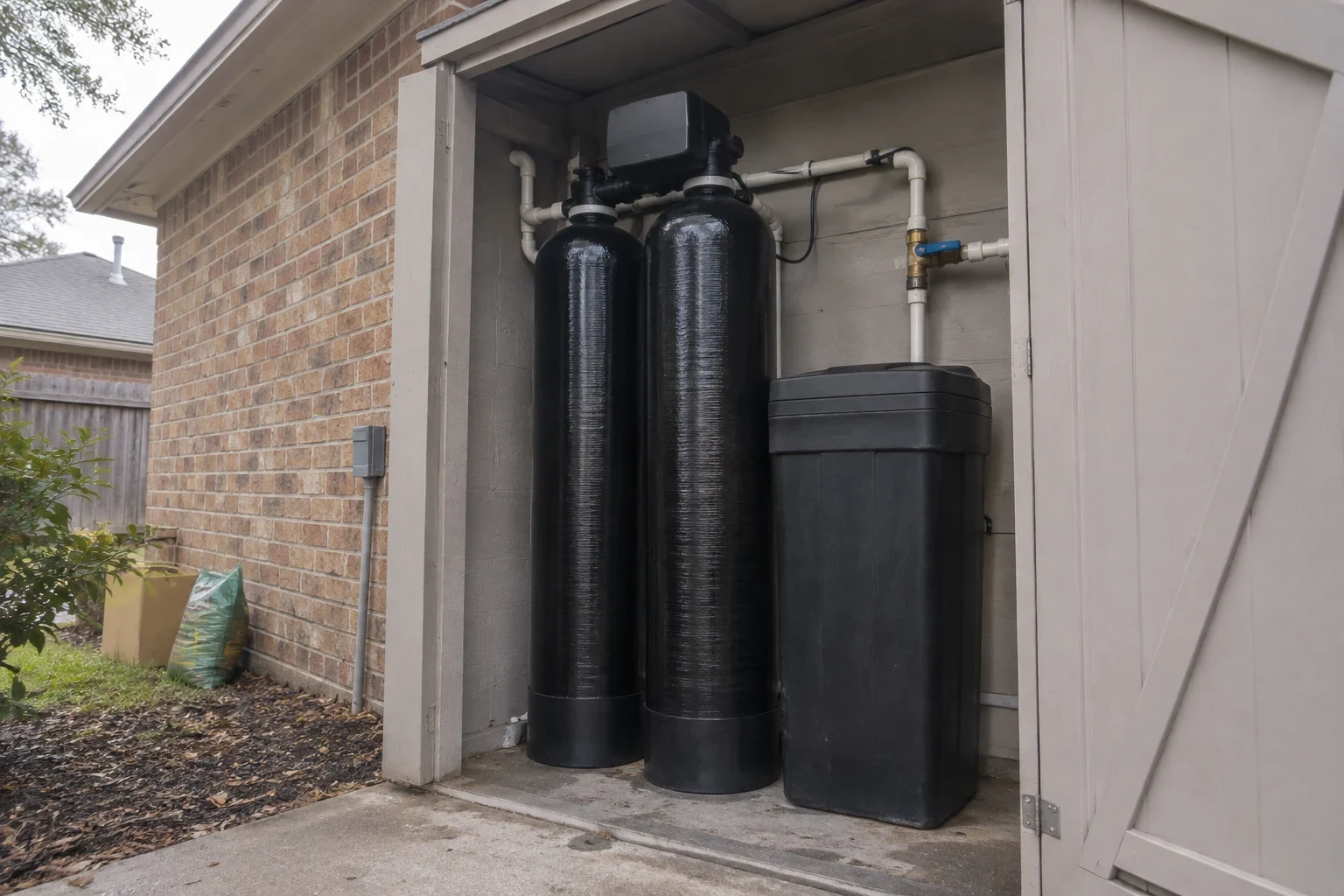
Yes. Comparing water before and after an existing filter or softener tells us whether the cartridge, carbon or resin is still working. Often a media change restores performance without replacing the whole unit.
Get Real Numbers for Your Water
Describe the stains, smells or taste changes you have noticed, and we will put together the set of tests that fits your home. Retests on existing systems are just as welcome as first-time checks.