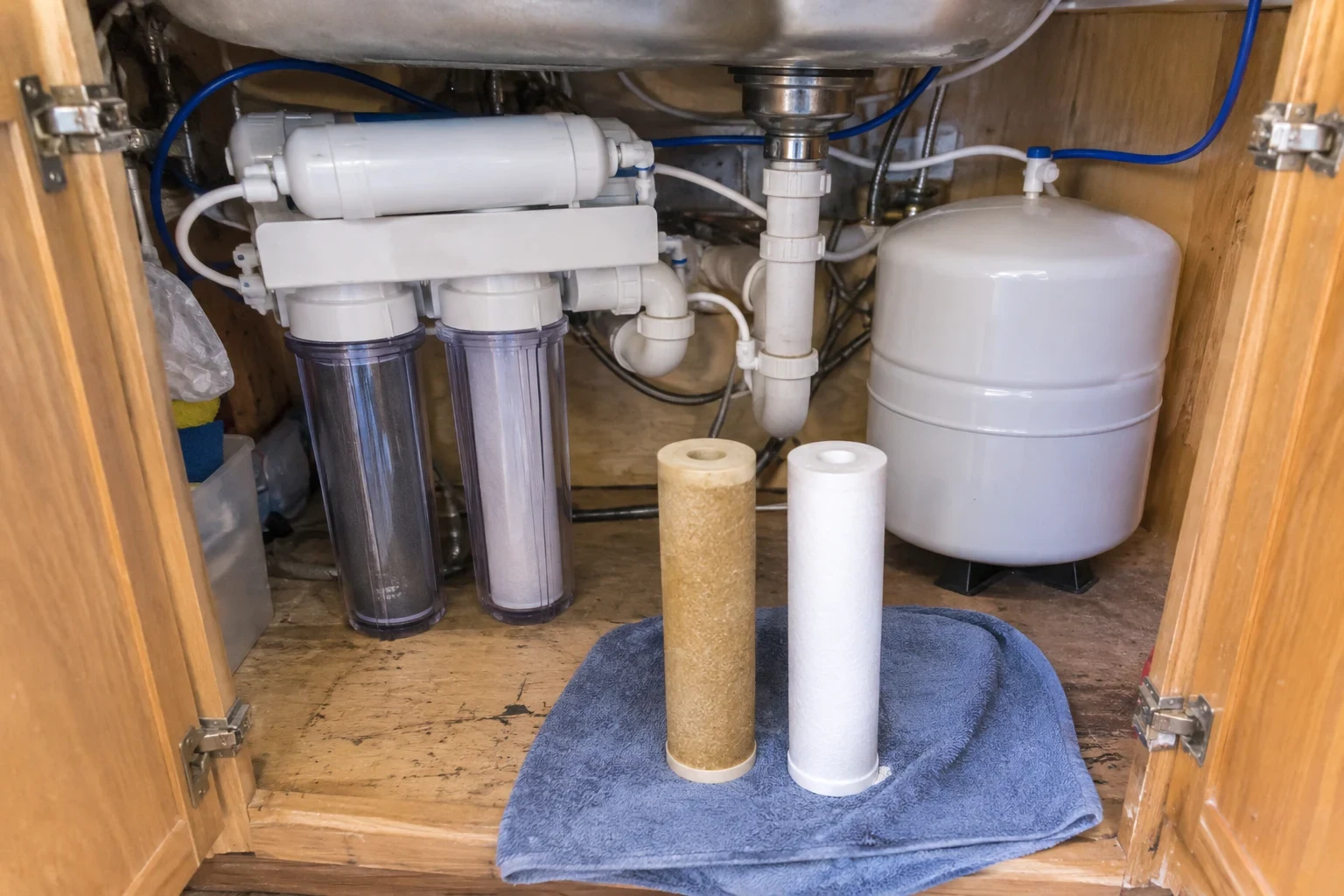
How often should you change RO filters in Humble?
An RO system is a chain of parts that protect each other, so the schedule follows what each stage does and what it catches first.
How often should you change RO filters?
Change the sediment and carbon prefilters every 6 to 12 months, the carbon post filter about once a year, and the RO membrane every 2 to 3 years. Heavy use, sediment or a well can shorten those intervals. A TDS reading and a slower tank tell you when. Questions about your system? (281) 942-4161
What each stage does and why it wears out
Most under-sink reverse osmosis units have four or five stages. Each one fails for a different reason, which is why they are not all replaced on the same day.
The prefilters are there to protect the membrane. The membrane does the real separation. The post filter cleans up taste on the way to your faucet. Once you know which job each part does, the schedule makes sense.
- Sediment prefilter: a pleated or spun polypropylene cartridge, usually rated around 5 microns. It traps sand, rust flakes and silt, and it clogs gradually until flow drops.
- Carbon prefilter: a carbon block or granular carbon cartridge that removes chlorine. Its capacity runs out quietly, with no change in flow to warn you.
- RO membrane: a thin-film composite sheet wound into a spiral. It rejects dissolved solids, including lead, and slowly loses rejection as scale and fouling build on its surface.
- Post filter: a small inline carbon cartridge, often coconut shell, that polishes taste after water sits in the storage tank.
Why the carbon prefilter matters more than people think
Thin-film composite membranes do not tolerate chlorine. Even low, steady exposure breaks down the polyamide layer, and a damaged membrane lets more dissolved solids through without any visible sign.
The carbon prefilter is what keeps chlorine off that membrane. If it goes a year and a half past its change date, it may still pass water just fine while chlorine slips through to the membrane behind it. That is how a membrane meant to last three years ends up done in eighteen months.
If your utility uses chloramine instead of chlorine, carbon block filters still work, but chloramine takes longer contact time to remove. That can push you toward the shorter end of the 6 to 12 month range.
What shortens or stretches the schedule in your home
The intervals printed on the housing assume average use and average water. Your actual schedule depends on how many gallons pass through and what is in them.
Homes on private wells around Humble often see more iron and fine sediment than homes on treated city water, and that can load a sediment cartridge in a few months. If your water is on the harder side, scale forms on the membrane faster. A water test tells us which of these you are dealing with, so the schedule fits your water instead of a generic label.
- How much you drink and cook with: a large household or an ice maker fed from the RO line adds up fast.
- Sediment and iron: these clog the first cartridge early and can foul the membrane if they get past it.
- Hardness: calcium and magnesium leave scale on the membrane surface and reduce output.
- Chlorine or chloramine level: higher demand uses up carbon sooner.
- Long idle periods: a system left unused for weeks while you travel should get a fresh flush, and sometimes fresh cartridges, before you drink from it again.
Signs a filter or membrane is due
The calendar is a starting point. These signs tell you a part has reached the end sooner than expected.
A handheld TDS meter is the most useful check. Compare the tap water reading with the RO faucet reading. A healthy membrane typically removes 90 percent or more of dissolved solids, and when that rejection rate keeps sliding after fresh prefilters, the membrane is the part to replace.
- The storage tank takes much longer to refill, or the faucet slows to a trickle.
- Chlorine taste or smell comes back in the RO water.
- The TDS reading at the RO faucet climbs well above what it was after the last membrane change.
- The drain line runs constantly, which can point to a failed automatic shutoff valve rather than a filter.
- Water from the RO faucet tastes flat or stale even with a full tank, which usually means the post filter is spent.
What a proper filter change includes
Swapping cartridges is only part of the visit. When we service a system, we shut off the feed valve, relieve pressure, and remove the old cartridges so we can look at what they caught. A sediment filter coated in orange tells us something different than one coated in gray silt.
We sanitize the housings, replace O-rings that have flattened or cracked, and lubricate them with food-grade silicone so they seal without leaking. We check the storage tank's air pre-charge, which should be around 7 to 8 psi with the tank empty, because a low charge makes a good system feel weak. Then we flush the new carbon to clear fines, test TDS before and after, and write down the date and readings so the next change is based on your numbers.
This is the kind of follow-up care we mean by full services after the sale. Keeping a system on schedule is far cheaper than replacing a membrane or a tank that wore out early.
More questions about RO filter changes
Something not covered here? (281) 942-4161
Can I change the prefilters but keep the old membrane?
Yes, as long as the membrane still tests well. Fresh prefilters often bring back flow, and if the TDS rejection rate is still strong, the membrane can stay in service.
Do I need to replace all the filters at the same time?
No. Prefilters and the post filter are usually changed together each year or sooner, while the membrane runs on its own longer cycle based on test readings.
Should the first glass after a filter change taste odd?
New carbon can release fine dust and a slight taste, which is why we flush the system and drain the first full tank before you drink from it.
Will a whole-home filter make my RO cartridges last longer?
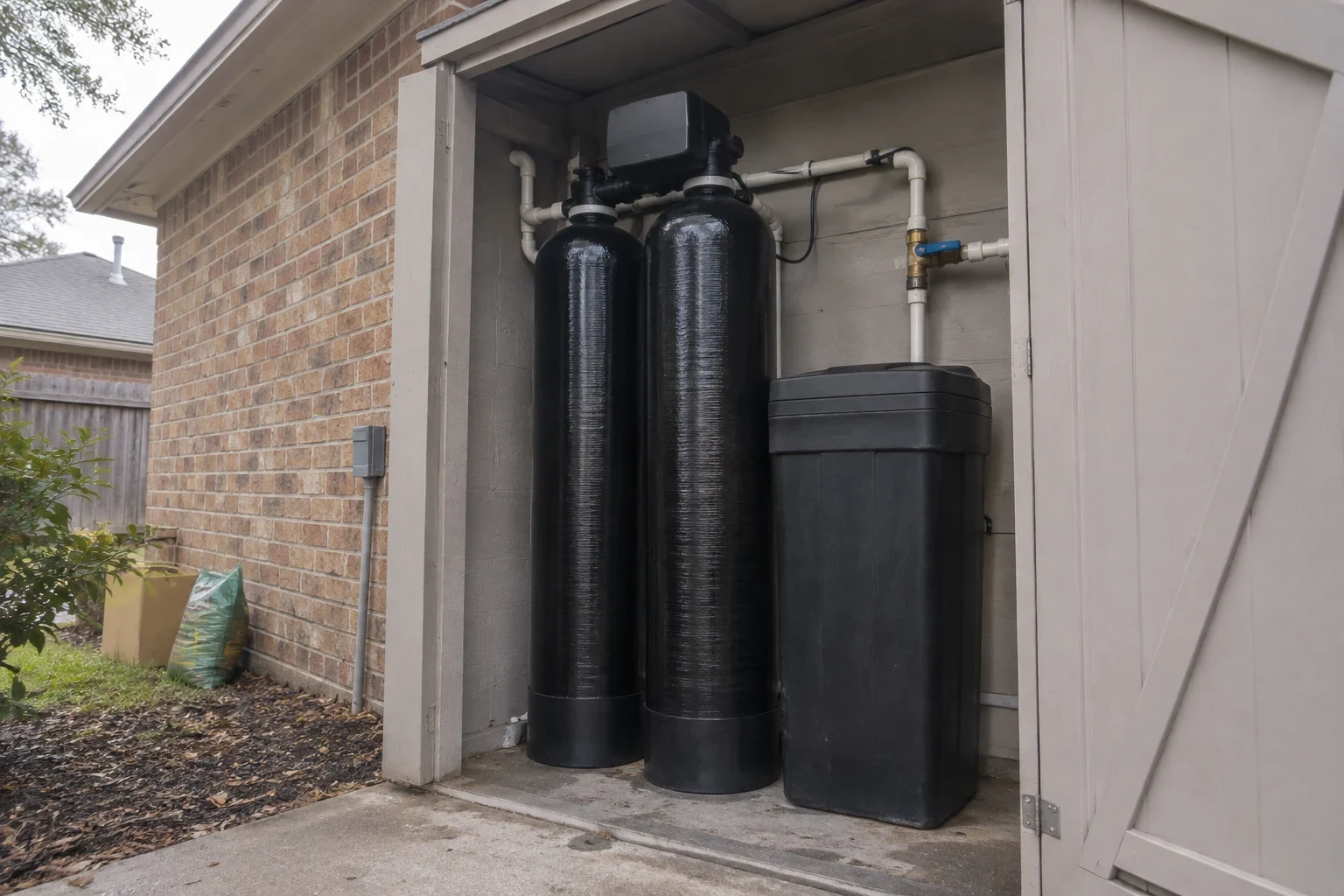
It can. A whole-home carbon or sediment filter takes the first load off the water, so the RO prefilters see cleaner water and the membrane is better protected.
Get your RO system back on schedule
Tell us your system's age, when the cartridges were last changed and how the water tastes. We will talk through what is likely due and set up a service visit that includes a TDS check and a clean, sanitized change.